Pollinator garden plans
A garden plan is a plant list with a constraint attached. The constraint is the thing you cannot change — how many hours of sun the site gets, whether the ground floods in winter, whether there is any ground at all — and it decides almost everything else. The plans below are grouped by that constraint first and by size second, because a plan for full sun in dry soil will fail in shade no matter how carefully it is followed.
Full sun
2 plans
Sites that get six hours or more of direct light, including the reflective heat of a south-facing wall.
-
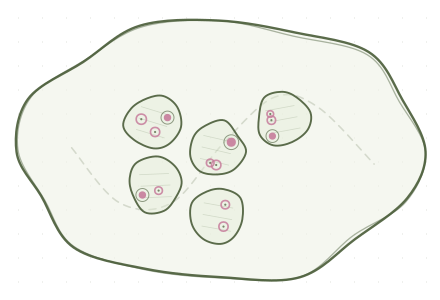
Turning a Strip of Lawn into a Meadow Patch
- Full sun
- May
- Jun
- Jul
- Aug
-
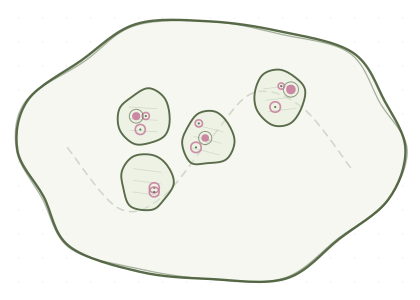
The Monarch Waystation: A Full-Sun Border That Raises a Brood
- Full sun
- Jun
- Jul
- Aug
- Sep
- Oct
Full sun to half shade
1 plan
Sites with a strong morning or afternoon half-day, often against a wall or under a deciduous tree that leafs out late.
-
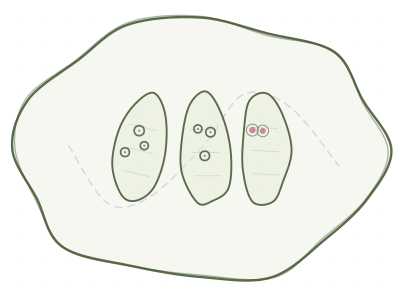
A Balcony Pollinator Garden in Six Pots
- Full sun to half shade
- May
- Jun
- Jul
- Aug
- Sep
How to use a plan
Read the aftercare section before you buy anything. Most pollinator plantings do not fail at planting; they fail in the second summer, when the first flush is over, the bed looks tired, and someone tidies it at the wrong moment. Four of the twelve plans here hinge on a single timing decision — leaving the stems standing, cutting in September rather than June, not mowing a strip, not raking the leaves — and those decisions matter more than the species list.
Every plant in every list is tagged as a host plant, a nectar plant or structure. That distinction is the whole point of the site. A bed of nectar plants will bring adult butterflies through for a few weeks; a bed that includes a host plant can produce them. If you are choosing between two plants and one is a host for a species you have actually seen nearby, take that one.