Pollinator garden plans › Planting the Woodland Edge for Shade-Loving Butterflies
Planting the Woodland Edge for Shade-Loving Butterflies
- Half shade to dappled shade
- Temperate northern hemisphere, woodland gardens
- about 25 m²
Most butterfly planting advice assumes sun, which leaves the largest area of many gardens - the ground under trees - with nothing to offer. Shade is not a write-off. The species that use it are different, and their season is different: they fly in spring before the canopy closes, and again in late summer in the dappled light under the leaves. This plan builds three layers under an existing tree and is designed around one shrub, spicebush, which is the host plant of the spicebush swallowtail.
The plan
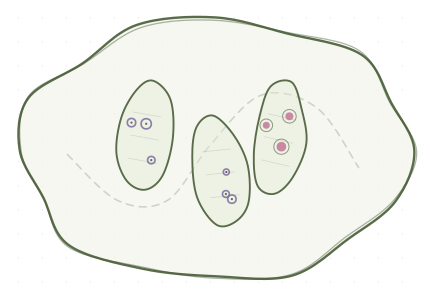
Work in layers, outward from the trunk. The first band, within one metre of the trunk, stays bare - planting there damages the tree's surface roots and creates competition you cannot win. The second band, from one to three metres, is the ground layer: ferns for structure and wood geranium for spring flowers. The third band, three to six metres out, is the shrub layer where spicebush and hazel go; this is where the caterpillar production happens, so give these plants the morning-sun side. Beyond six metres is the transition zone where you can blend into a sunnier border with columbine and bee balm. If your tree is a maple or a beech, both of which cast very heavy shade and have dense surface roots, expect the ground layer to struggle and put the shrub layer further out.
Planting order
Work through these in sequence. The order matters more than the exact spacing — several of the steps are about removing fertility or opening the ground before anything is planted.
- Map the shade first. Dappled shade under a high canopy is completely different from deep dry shade under a dense conifer, and only the first will grow woodland wildflowers.
- Site spicebush where it gets morning sun. It tolerates shade but flowering and therefore caterpillar production are much better with three or four hours of early light.
- Build the bed outward from the trunks in layers: ground layer of ferns, mid layer of geranium and columbine, shrub layer of spicebush and hazel.
- Keep a clear 1 m ring around each trunk with no planting, so the tree's roots are not disturbed and you have somewhere to stand.
- Plant jewelweed along the dampest line in the bed, or beside a downpipe. It is the single best late-summer nectar plant in shade and it self-seeds freely once it is happy.
- Do not rake the leaf litter out in autumn. Spicebush swallowtail pupae overwinter in the litter inside a rolled leaf, and so do the chrysalises of many other woodland species.
Plant list
| Plant | Botanical name | Role |
|---|---|---|
| Spicebush | Lindera benzoin | Host · caterpillar food |
| Columbine | Aquilegia canadensis | Nectar · adult food |
| Wood geranium | Geranium maculatum | Nectar · adult food |
| Jewelweed | Impatiens capensis | Nectar · adult food |
| Bee balm | Monarda didyma | Nectar · adult food |
| Bluebell | Hyacinthoides non-scripta | Nectar · adult food |
| Christmas fern | Polystichum acrostichoides | Structure |
| Hazel | Corylus americana | Structure |
Plants and why they are here
Spicebush does the heavy lifting as a host plant, and it is one of the best native shrubs for this situation: it tolerates wet or average soil, grows in deep shade, and has yellow flowers in early spring. Hazel is included mainly for structure and for the early pollen that some insects use. In the ground layer, wood geranium gives you May flowers in near-full shade, which is rare. Columbine is the best spring nectar plant for shade and it self-seeds into gaps in walls and paving. Jewelweed and bee balm are the summer nectar pair - jewelweed for damp shade, bee balm for the drier, sunnier edge - and both are strong enough to pull an adult swallowtail down out of the canopy. Bluebells are worth adding under deciduous trees where you want a spring carpet, but keep them well away from ancient woodland.
Aftercare
Leave the leaf litter. This is the single most important instruction in a woodland bed, and it is the one most often ignored because people equate leaves with mess. The litter is where pupae overwinter, where ground beetles live, and where the soil's structure is built. Water new plants for two summers, after which these species should be on their own. Do not mulch with bark chips around spicebush - it keeps the soil too dry and suppresses the natural regeneration that gives you free plants. Prune hazel only if you are coppicing it deliberately, and never between April and July.