Pollinator garden plans › Turning a Strip of Lawn into a Meadow Patch
Turning a Strip of Lawn into a Meadow Patch
- Full sun
- Temperate Europe and North America
- about 40 m²
A meadow patch is the highest-value change most gardens can make for insects, and it is also the one most often abandoned in the second year. The reason is almost always fertility. A lawn that has been fed and mown for twenty years sits on soil far too rich for wildflowers, and if you simply stop mowing, you get long grass and nothing else. This plan is a two-year conversion that strips fertility first and sows flowers second.
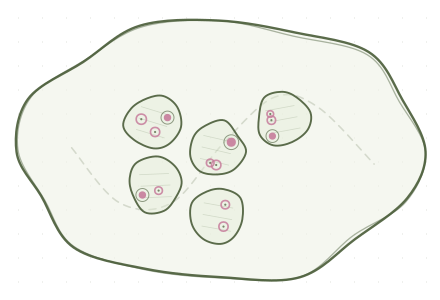
The plan
Start in late August or early September. Cut the strip as short as the mower will go, then go over it with a rake and a scarifier and take the cuttings away - not to the compost heap beside the patch, but out of the area entirely. Repeat the cut-and-clear three times over the following twelve months: September, May, and September again. Each cut removes nitrogen. By the second autumn the grass will be visibly thinner and yellowing, which is exactly what you want. Only then sow the wildflower seed, at about 3 g per square metre, into the scarified strips. Tread it in or roll it lightly so the seed has contact with soil; a seed sitting on top of thatch will not germinate.
Planting order
Work through these in sequence. The order matters more than the exact spacing — several of the steps are about removing fertility or opening the ground before anything is planted.
- Choose the poorest soil in the garden. If the lawn grows lush grass, it is too fertile for a meadow and you will get grass and nothing else.
- Cut the grass as short as you can in late summer and rake off every clipping. Removing the cuttings is what removes the fertility.
- Scarify the surface in strips about 30 cm apart to open the thatch so seed can reach soil.
- Sow yellow rattle first and on its own. It is a hemiparasite that weakens grass, and without it a lawn conversion fails in most fertile gardens.
- Wait a full year, then sow the wildflower mix into the thin patches the rattle has created. Sow in September, not spring - autumn sowing suits these species and avoids the June drought.
- Mark out a mown path through the patch. It makes the meadow look deliberate rather than neglected and it gives you a route to walk and record what is flowering.
Plant list
| Plant | Botanical name | Role |
|---|---|---|
| Bird's-foot trefoil | Lotus corniculatus | Host · caterpillar food |
| Ox-eye daisy | Leucanthemum vulgare | Nectar · adult food |
| Field scabious | Knautia arvensis | Nectar · adult food |
| Knapweed | Centaurea nigra | Nectar · adult food |
| Yarrow | Achillea millefolium | Nectar · adult food |
| Selfheal | Prunella vulgaris | Nectar · adult food |
| Yellow rattle | Rhinanthus minor | Nectar · adult food |
| Cuckooflower | Cardamine pratensis | Host · caterpillar food |
Plants and why they are here
Yellow rattle is the key species and it should go in first, in its own sowing. It parasitises grass roots and opens up the sward, and meadows sown without it in fertile gardens almost always revert to grass within three years. Once it is established, the mix should be dominated by perennials rather than annuals: ox-eye daisy for the May peak, field scabious and knapweed for July and August, yarrow and selfheal to fill the gaps, and bird's-foot trefoil throughout, which is both a nectar source and the host plant for the common blue. Add cuckooflower only if the ground stays damp through spring, since it will not tolerate a dry site.
Aftercare
Cut the whole patch once a year, in late August or early September, and remove all the cuttings. Do not cut in spring; the caterpillars of the common blue overwinter in the base of the sward and a spring cut destroys them. If the meadow starts to look grass-dominated again after four or five years, reintroduce yellow rattle rather than re-sowing everything. Never feed it, never apply weedkiller, and never leave the cuttings in place - a single year of leaving them will undo two years of fertility stripping.