Pollinator garden plans › The Monarch Waystation: A Full-Sun Border That Raises a Brood
The Monarch Waystation: A Full-Sun Border That Raises a Brood
- Full sun
- Temperate North America
- about 12 m²
This is the plan for a border that does two jobs at once: it feeds adult monarchs from June to October and it carries caterpillars through to chrysalis. The rule that governs everything else is quantity. A monarch female lays one egg per plant and can visit dozens of plants in an afternoon, so a bed with three milkweed stems is a nectar stop, not a nursery. This layout uses twelve square metres and roughly thirty milkweed stems across three species, which is the smallest planting we would call reliably productive.
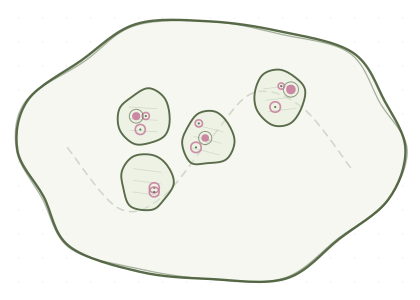
The plan
Site the bed in the sunniest spot you have, minimum six hours of direct light, and orient it so the long axis runs east to west - that way the plants shade each other's roots rather than each other's leaves. Build it 2.5 m deep so you can reach the middle from either side without stepping into the bed, which matters because milkweed stems snap easily and the sap is a skin irritant for some people. Grade the soil so the wetter end sits where you put swamp milkweed; the species name incarnata is a clue to its preference. Leave a 40 cm mown path along the south edge so you can walk the border without brushing against the plants, and so the caterpillars that wander off to pupate have somewhere to go that is not your lawnmower's path.
Planting order
Work through these in sequence. The order matters more than the exact spacing — several of the steps are about removing fertility or opening the ground before anything is planted.
- Work out where the sun is from 10am to 4pm and put the bed there, not where it suits the house. Milkweed in shade produces leaves but very few flowers, and a monarch female will not lay on it.
- Prepare a bed at least 2.5 m deep and 5 m long. Milkweeds spread by rhizome and a single row will not give the caterpillars enough foliage to complete a brood.
- Put the tallest nectar plants at the back - Joe-pye weed reaches 2 m and will flop if it is not sheltered or staked.
- Space the three milkweed species through the middle so flowering does not all happen at once. Butterfly weed flowers first, swamp milkweed second, common milkweed last.
- Front the bed with a 60 cm band of flowering annuals - zinnia and cosmos - which fill the gap in the first year before the perennials establish.
- Leave a shallow tray of damp sand at the sunny edge. Male monarchs puddle for minerals and will use it daily in hot weather.
Plant list
| Plant | Botanical name | Role |
|---|---|---|
| Common milkweed | Asclepias syriaca | Host · caterpillar food |
| Swamp milkweed | Asclepias incarnata | Host · caterpillar food |
| Butterfly weed | Asclepias tuberosa | Host · caterpillar food |
| Joe-pye weed | Eutrochium purpureum | Nectar · adult food |
| Blazing star | Liatris spicata | Nectar · adult food |
| New England aster | Symphyotrichum novae-angliae | Nectar · adult food |
| Goldenrod | Solidago speciosa | Nectar · adult food |
| Zinnia | Zinnia elegans | Nectar · adult food |
Plants and why they are here
The backbone is three milkweeds with staggered bloom: butterfly weed in May and June, swamp milkweed in July, common milkweed in July and August. Between them they cover the whole laying season. Around them, the nectar layer needs to peak late, because the migratory generation is building fat in September. Joe-pye weed, blazing star, New England aster and a goldenrod cover August to October, which is exactly when the monarchs need it and exactly when most gardens have nothing left. Zinnias fill the first summer and are the single best annual for a butterfly border - they are cheap, they reseed, and they flower until frost.
Aftercare
Cut common milkweed stems to about 15 cm in late autumn, not to the ground - the hollow stems are used by overwintering insects and the rhizomes need the stubs. Do not cut swamp milkweed at all in its first year. Never spray anything on or within ten metres of the bed; even a herbicide drift from a lawn treatment will kill a caterpillar. If you find more caterpillars than the milkweed can feed, move some to another milkweed patch rather than buying more plants. Expect the bed to look scruffy in August - the eaten leaves are the point.