Butterfly dossiers › Swallowtails › Eastern Tiger Swallowtail
Eastern Tiger Swallowtail
Papilio glaucus · Swallowtails
The Eastern tiger swallowtail is the butterfly most people picture when they hear the word swallowtail: four inches of black-striped yellow, floating high through the tree canopy in midsummer. It is also one of the few large North American butterflies that has learned to live in suburbs, because two of its four main host trees - black cherry and tulip tree - are common street and yard trees.
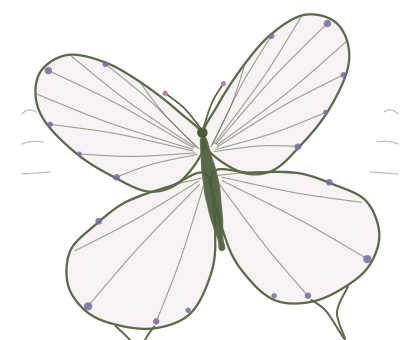
- 7.9-14.0 cm wingspan
- Swallowtails
- Host: Wild black cherry, tulip tree, green ash, magnolia
Identification
Look for a yellow forewing crossed by four black tiger stripes, with a black border studded along the trailing edge. The hindwing carries a row of pale yellow spots that stop short of the tail. Females come in two forms: the familiar yellow one, and a dark form that is almost entirely black with faint stripe shadows. The dark female is a mimic of the pipevine swallowtail, which is toxic, and it is most common in the south where pipevines grow.
Habitat and where to look
Open woodland, woodland edge, tree-lined suburban streets and river corridors. Adults spend a surprising amount of their time in the canopy of tall trees rather than at flowers, which is why a garden that grows only low perennials can look empty while tiger swallowtails are clearly present. Watch for them puddling on damp gravel and on animal droppings, where several males will gather to draw up minerals.
Life cycle
A female lays eggs one at a time on the upper surface of a host leaf, usually on a young tree at the edge of a clearing. The young caterpillar chews a leaf into a half-moon shape, folds it over itself and hides inside. As it grows it turns green with two convincing false eyespots behind the head and, when threatened, pushes out an orange forked gland called an osmeterium that smells faintly of rotten fruit. The chrysalis is the overwintering stage in the north. There the pupa hangs all winter, brown as the bark it is attached to, and adults emerge the following May or June.
How to attract it
Plant a black cherry and accept the tent caterpillars that come with it. Tulip tree works if you have the space. For nectar, plant in drifts rather than one of everything: a three-foot square patch of Joe-pye weed will hold more swallowtails than six isolated plants scattered across a border. Tiger swallowtails prefer flowers with a wide landing platform and will use a butterfly bush heavily in August, so place one where you can see it from a window. Leave a damp corner of bare ground or a shallow dish of wet sand for puddling.