Butterfly dossiers › Swallowtails › Black Swallowtail
Black Swallowtail
Papilio polyxenes · Swallowtails
The black swallowtail is the swallowtail you can actually get without owning land. Its caterpillars eat dill, parsley, fennel and carrot tops, which means a single pot of herbs on a balcony can raise a full brood. It is also the species most likely to be mistaken for the toxic pipevine swallowtail, and it leans on that resemblance for protection.
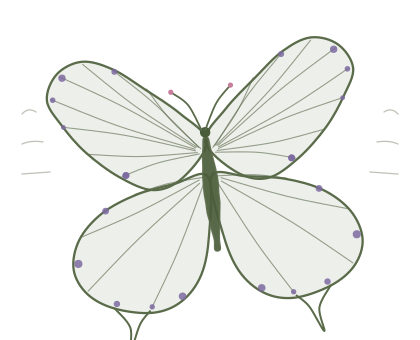
- 6.9-8.4 cm wingspan
- Swallowtails
- Host: Dill, parsley, fennel, carrot, celery and other Apiaceae
Identification
Black wings with two rows of pale yellow spots on the upper surface and a larger row of orange spots on the underside of the hindwing. The abdomen has a neat row of yellow dots down each side. Males are more intensely black with larger yellow bands; females are dusted with iridescent blue on the hindwing. Compare with the pipevine swallowtail, which has only one row of orange spots and a very different flight - pipevines flutter weakly, black swallowtails glide strongly.
Habitat and where to look
Open ground of almost any kind: hay meadows, roadsides, old fields, vegetable gardens, vacant lots and railway embankments. It is a butterfly of disturbed ground and it does well wherever its umbellifer host plants are allowed to grow unmown. Adults nectar with their wings almost constantly fluttering, working a patch of clover or thistle in a slow circuit.
Life cycle
Females lay single round eggs on the leaf stalks and flower heads of the host plant, never in clusters. The caterpillar passes through a black-and-orange phase with a white saddle band that makes it look like a bird dropping, then turns banded green with black stripes in later instars. Both stages carry an orange osmeterium that is flicked out when the caterpillar is touched and releases a sharp, slightly unpleasant scent. The pupa is either green or tan and attaches to a stem several inches above the ground, where it overwinters.
How to attract it
Let a patch of dill and fennel bolt. Seed heads are what the females key on, so do not cut them off. Plant bronze fennel for the foliage and let at least half of it flower. Because the caterpillars can strip a small pot in two days, sow a second and third succession of dill a fortnight apart so there is always fresh foliage. For nectar, red clover and butterfly weed are both reliable, and a low damp spot in the lawn will draw males to puddle.