Butterfly dossiers › Brush-footed › Monarch
Monarch
Danaus plexippus · Brush-footed
The monarch is the only butterfly most people can identify from a moving car, and it is also the only one in North America that makes a true two-way migration. Individuals born in late summer fly up to 4,800 kilometres to a handful of mountain forests in central Mexico, overwinter in clusters that weigh down whole fir branches, and then fly north again in spring over two or three generations. Its caterpillars eat milkweed and nothing else, which makes milkweed the single most important plant in any pollinator garden on the continent.
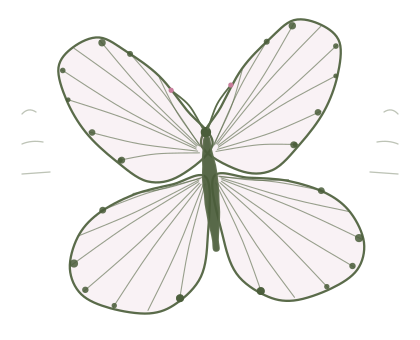
- 8.9-10.2 cm wingspan
- Brush-footed
- Host: Milkweeds - common milkweed, swamp milkweed, butterfly weed, tropical milkweed
Identification
Unmistakable in North America: deep orange wings, black veins, and a thick black border carrying two rows of white dots. The hindwing lacks a tail. The underside is paler and slightly different - the forewing underside is orange with black veins, the hindwing underside is pale yellow with black veins and white spots. The viceroy, which shares the range, is smaller and has a black line running across the hindwing veins that the monarch does not have.
Habitat and where to look
Open country wherever milkweed grows: prairie, pasture, roadside, railway verge, old field, garden. Monarchs are strong migrants and use thermal updrafts and coastal flyways. In the breeding season they need both a milkweed patch for the larvae and a nectar source within a few hundred metres, because an adult female must find both repeatedly over a season. In the evening they roost communally, several dozen hanging in a single tree.
Life cycle
A female lays one egg per milkweed plant, usually under a young leaf near the top, and can lay several hundred over a lifetime. The caterpillar eats milkweed exclusively and sequesters the plant's cardenolides, which makes it poisonous to most birds - the banded black, white and yellow pattern is a warning, not camouflage. It moults five times in about two weeks, then wanders away from the food plant to pupate. The chrysalis is jade green with a line of tiny gold dots, an astonishing piece of natural engineering that takes about ten days in summer. Late-summer adults are the migratory generation: they do not mate or develop eggs, and they live up to eight months rather than the four to five weeks of the summer generations.
How to attract it
Grow milkweed first, and grow enough of it - one plant will not raise a brood. Common milkweed spreads by rhizome and needs room; swamp milkweed is tidier and tolerates wet soil; butterfly weed is compact, drought-tolerant and the best choice for a small border. Cut tropical milkweed back to the ground in late autumn in warm climates, since it can encourage monarchs to skip migration and can carry a protozoan parasite. Never use pesticides on or near milkweed, and never move a caterpillar onto a plant that has been sprayed. For nectar, goldenrod and asters planted as a late-summer block will fuel the migration.